SmartPeep Sdn Bhd 4044, 4047


The global demographic shift toward an ageing population is placing increasing strain on healthcare systems, intensifying nurse shortages and elevating patient safety risks. In hospital environments, patient falls—particularly in high-occupancy, multi-bed wards—remain a critical challenge that demands scalable monitoring solutions.
In response, SmartPeep has developed an AI-powered patient monitoring platform designed to support nurses in delivering safe, continuous care across ward settings. By enabling the simultaneous monitoring of multiple patients, SmartPeep helps healthcare providers maintain care quality while easing workforce pressures.
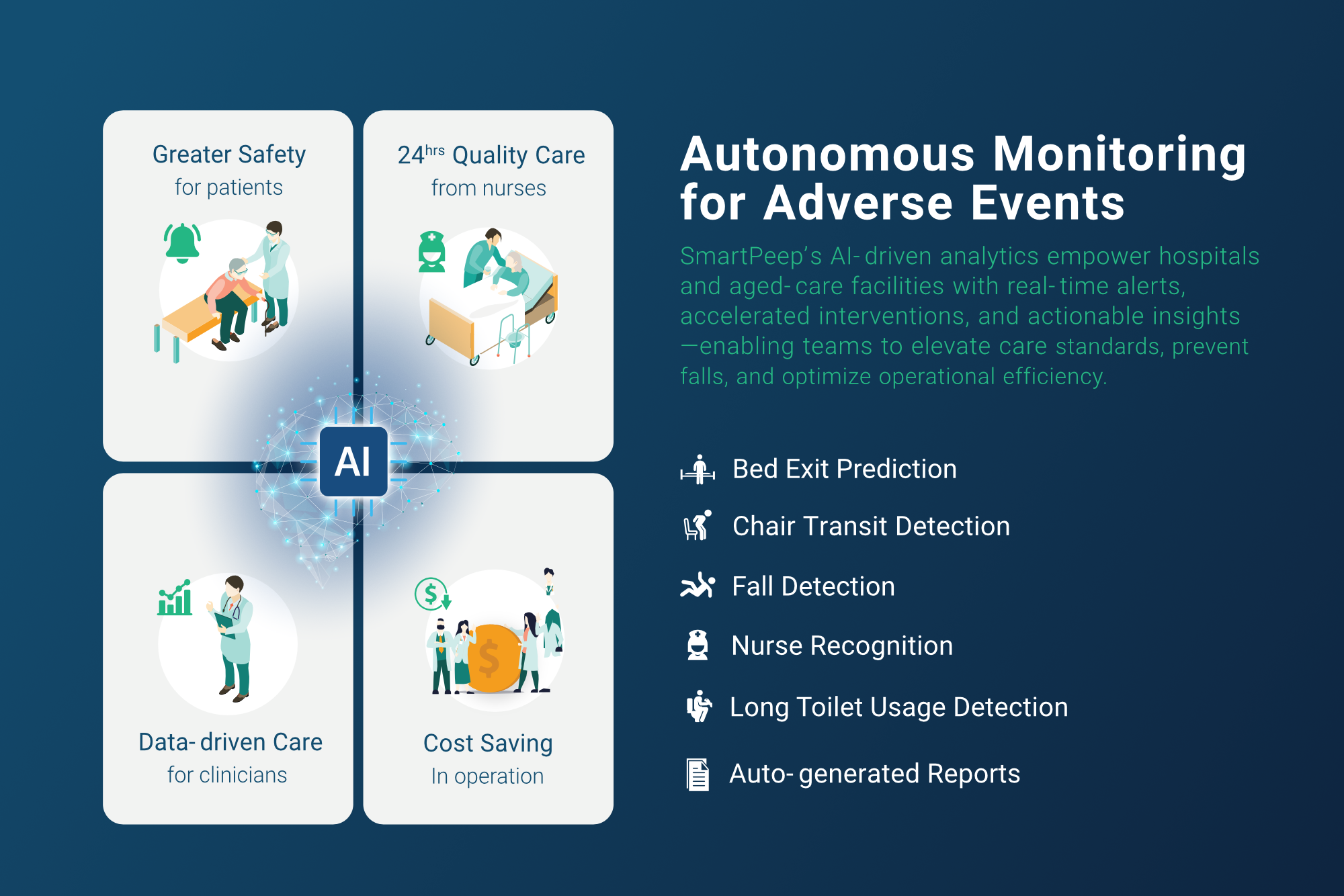
At the foundation of the platform is Fall Prevention & Detection, powered by care-oriented optical sensing that transforms ward spaces into smart environments. Unlike traditional bed sensors and wearable devices that contribute to alert fatigue, SmartPeep employs a single-sensor approach covering beds, chairs, and shared ward areas. This includes fall detection, bed- and chair-exit detection, bedsore risk monitoring, and extended toilet usage tracking—capabilities shown to reduce fall incidents by over 50%.
These capabilities are unified through Smart Ward Monitoring, delivering continuous, real-time oversight across multi-bed wards, where patient density and risk are highest. By consolidating multiple monitoring functions into one system, SmartPeep improves nursing efficiency and supports 24/7 quality care without increasing staffing demands.
For clinical leaders and hospital management, ward-level insights are presented through the Patient Safety Dashboard – Multibed Wards, providing visibility into patient risk, alerts, and response performance across shared wards. Designed to be PDPA-compliant, the platform uses blurry visual alerts and a strict no-video-recording policy, ensuring patient dignity while advancing a new standard in ward-scale patient safety.